
Thermal Processing · In-Container Pasteurization
In-Container Pasteurization for High-Acid Foods & Beverages
In-container pasteurization systems ensure product safety, stability and extended shelf life for high-acid or acidified products such as beers, ciders, fruit juices, sauces and pickled foods. By applying heat to sealed containers after filling, harmful microorganisms are destroyed while product quality, flavour and nutritional characteristics are preserved.
Overview
In-Container Pasteurization
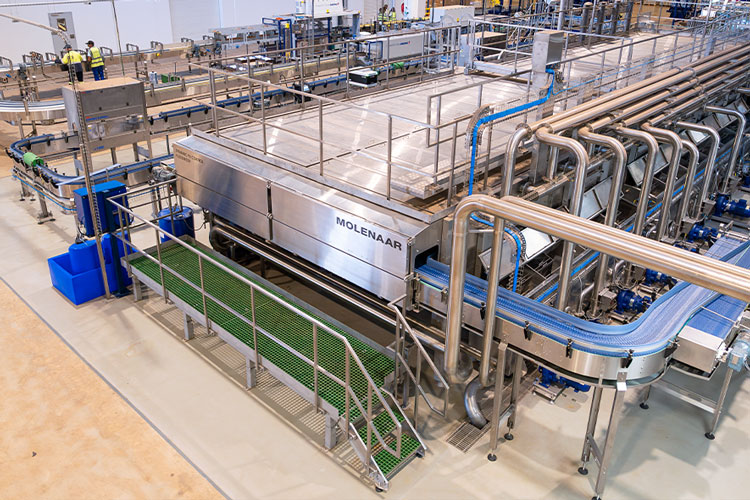
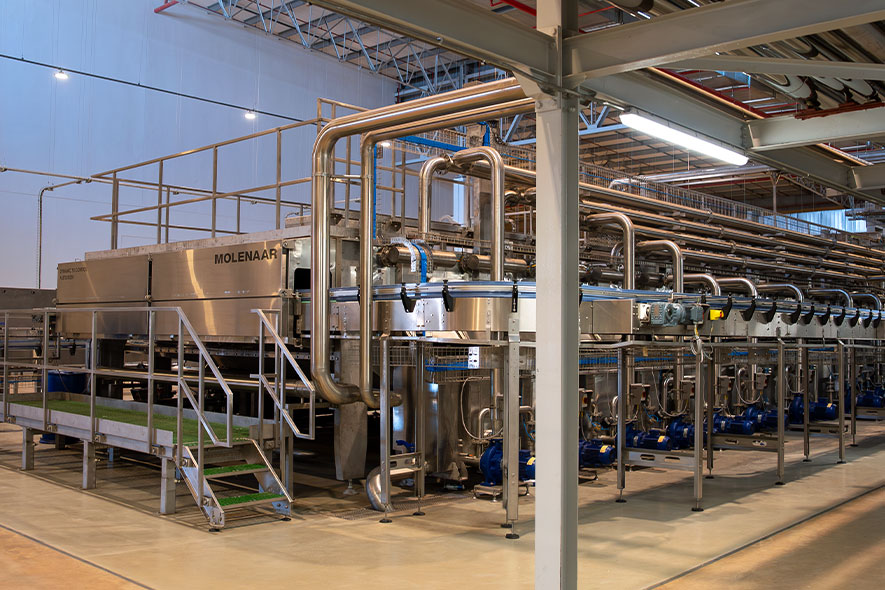
Molenaar’s in-container pasteurization solutions are typically implemented using continuous pasteurization tunnels that carefully heat and cool packaged products to achieve the required pasteurization units (PU). These systems support a wide range of container formats — including glass bottles, aluminium cans, jars and other sealed packaging — making them suitable for both beverage production lines and food processing applications.
The Method
Pasteurization vs. Sterilization
Pasteurization is intended for high-acid or acidified foods and beverages where the product’s acidity itself inhibits spore germination — suitable for products with a pH typically 4.6 or below. These products only need a milder heat treatment (generally under 100 °C) to destroy yeast, moulds and vegetative bacteria and to deactivate enzymes. Pasteurizing food and beverages in their final container offers several advantages:
- Eliminates pathogens and spoilage organisms after the product is sealed — no chance of recontamination before it reaches the consumer.
- Nutritional and sensory qualities of the food are largely preserved.
- Delivers a safe product with extended shelf life, often stable at room temperature.
- Beers, ciders and many bottled juices gain several months of shelf stability outside refrigeration.
- Foods like salsa and pickled vegetables are treated in-container to destroy microbes while keeping fresh taste and texture.
The Process
How In-Container Pasteurization Works
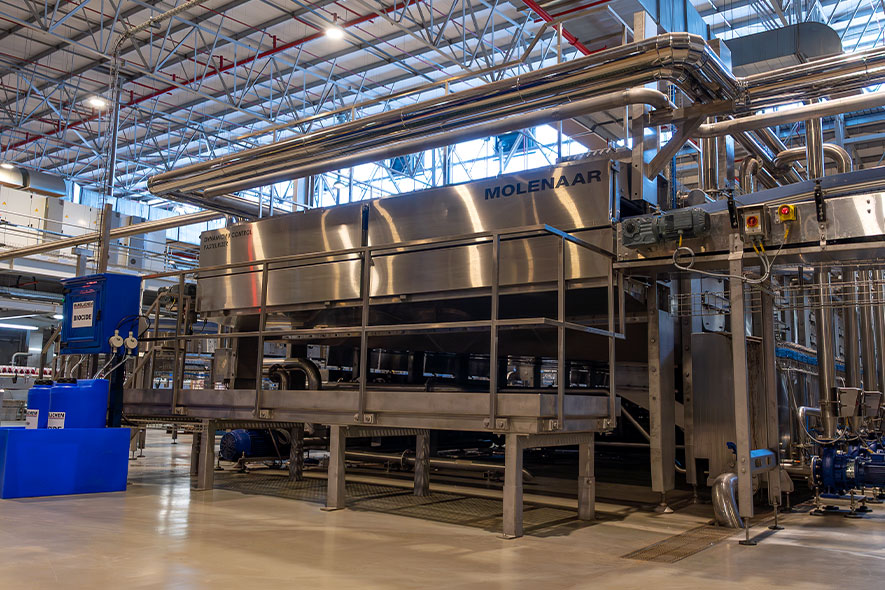
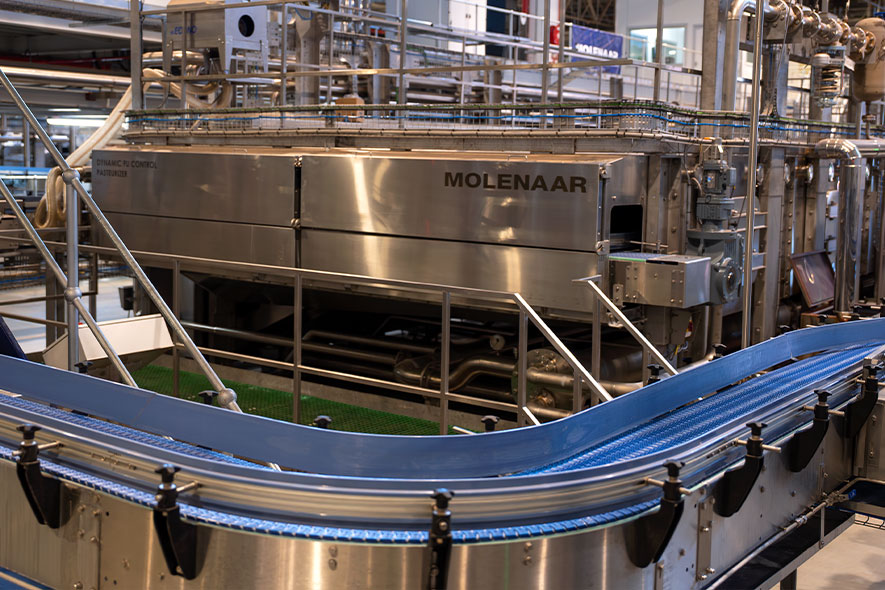
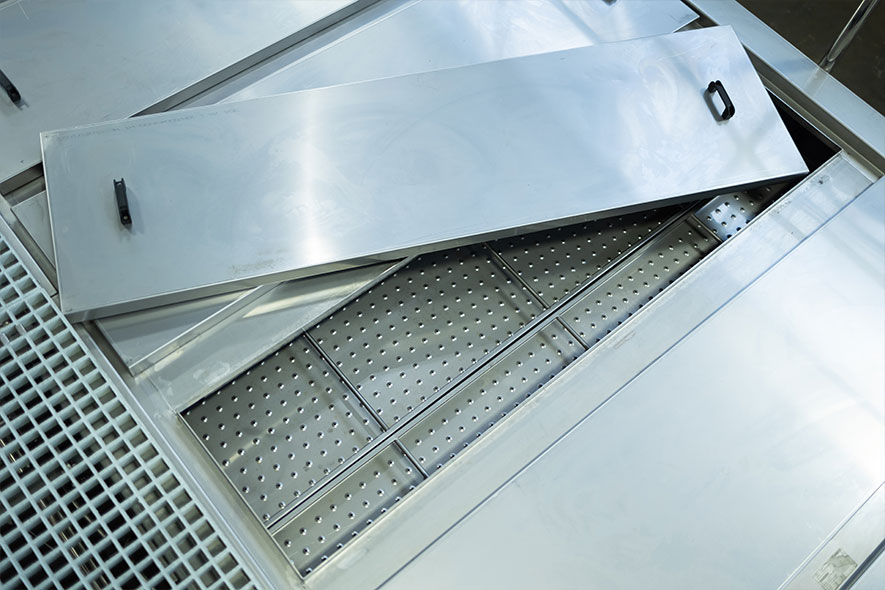
Molenaar’s in-container pasteurization systems typically take the form of continuous tunnel pasteurizers. Filled, sealed containers travel on a conveyor through a controlled tunnel divided into zones that progressively warm the products to the target temperature, hold them for the required time (to achieve the desired PUs), then cool them back to ambient. Doing this gradually avoids thermal shock and preserves product quality.
Heating is usually accomplished by cascading hot water onto the containers, efficiently transferring energy. Each container follows a precisely calculated time–temperature profile; a typical beer pasteurizer might heat bottles to ~60 °C, hold, then gradually cool. Each zone is automated, using a PU calculation to adjust parameters in real time so every product receives adequate heat without overprocessing.
Pasteurization Units (PU)
The Pasteurization Unit (PU) quantifies the microbial inactivation effect, so even if throughput or incoming product temperature varies, the process compensates to consistently deliver the target PUs. Controlled cooling is vital to avoid bottle shock in glass containers or changes to the flavour profile — containers emerge pasteurized, cooled and ready for labelling or packing.
Applications
Use Cases
Tunnel pasteurization is widely used in the beverage industry and for acidic or acidified foods. Common use cases include:
Beer & Cider
Breweries pasteurize beer in bottles or cans to destroy yeast and microbes after packaging, extending shelf life with minimal impact on flavour when properly controlled.
Fruit Juices & Teas
Bottled juices, nectars, iced teas and acidic functional drinks are tunnel-pasteurized to eliminate pathogens and deactivate enzymes, so they can be sold ambient for months.
Acidified & Fermented Foods
Pickles, fermented hot sauces or canned fruit in syrup are high in acid and treated in-container, preventing any contamination that could occur after an open-vat pasteurization.
Key benefits: extended shelf life without preservatives and higher product quality than harsher processes; and no risk of re-contamination, with a process that is relatively easy to validate for regulatory compliance.
Molenaar
Molenaar’s Pasteurization Solutions
Molenaar’s standard pasteurization tunnels are tailored to your product and container specifications, built with robust stainless steel construction and modular sections.
Container flexibility
Glass bottles, aluminium cans, plastic bottles and pouches — each with appropriate cascading patterns and zone configurations.
PLC control & data logging
User-friendly PLC controls and monitoring, with time/temperature data logging for quality assurance and record-keeping.
Energy recovery & safety
Energy recovery for efficiency, plus safety interlocks, automated temperature controls and emergency-stop features as standard.
Our experts consider your overall processing line, often integrating pasteurizing tunnels with upstream and downstream equipment for a smooth production flow — with full local support for installation, commissioning and ongoing maintenance. By choosing Molenaar’s in-container pasteurization systems, you protect your product’s quality and safety while benefiting from our decades of experience in thermal processing.
Get In Touch
Talk to Us About In-Container Pasteurization
Talk to Molenaar about an in-container pasteurization solution built around your product, containers and throughput — for safe, shelf-stable beverages and high-acid foods.